
Commercial floor care in Florida is a moisture problem first. Dirt comes second. Most floor programs were written for buildings that dry out every winter. Florida buildings never get that break. From June through November, hurricane season, a lobby in Miami or Tampa can take weeks of afternoon storms. Water walks in on every pair of shoes.
Clean Space has cleaned commercial buildings across Florida since 2011. The same four problems keep showing up: finish that refuses to harden, marble that goes dull right at the door, carpet that smells musty a few days after cleaning, and exterior walkways turning green. Each one has a cause you can plan around.
Why Florida Floors Wear Differently
Moisture, sand, and air conditioning hit the floors at the same time.
Humidity slows anything that cures by drying, most finishes and stone sealers included. Rain turns entrances into wet zones for half the year. Sand is quieter but just as damaging. It rides in on shoes from parking lots and beach-town sidewalks and acts like fine sandpaper on finish and polished stone.
Then the AC does its part. Buildings stay cold and dry inside while the outside air is warm and wet. Every time a door opens, the two collide. Entrances, loading docks, and lobbies with big glass doors take the brunt of it.
A national template (one strip-and-wax a year, carpet on a fixed quarterly cycle) usually falls behind by July. Florida floors need a Florida calendar.
VCT and Floor Finish: Why It Won’t Harden
Floor finish on vinyl composition tile needs dry air to cure. Florida rarely supplies it on its own. In a humid building each coat dries slower. Put the next one down too soon and you trap moisture underneath. Weeks later the floor looks cloudy, feels soft, scuffs easily, and won’t take a burnish.
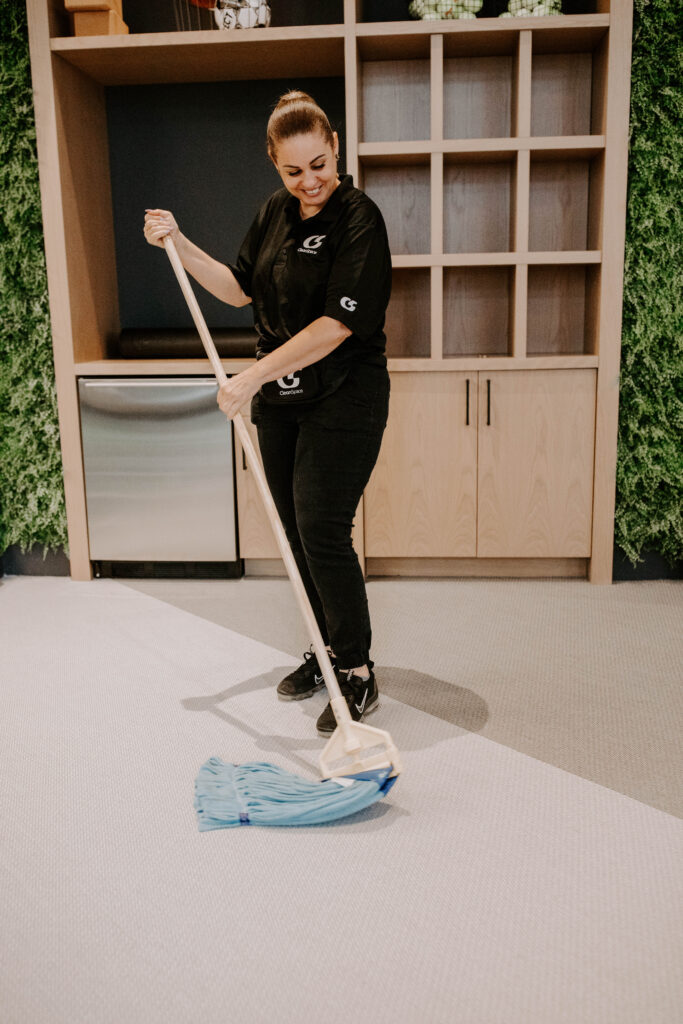
What to change:
- Apply finish with the AC running and the doors closed. Check the manufacturer’s temperature and humidity range before the crew starts.
- Give each coat more dry time than the label minimum on wet days. If it feels tacky when you drag a fingertip across it, wait longer.
- Schedule full strip-and-recoat jobs for the drier months, roughly November through April in most of the state.
- Burnish high-traffic lanes more often between recoats. It’s far cheaper than stripping early.
A rushed recoat in August is one of the most expensive shortcuts in floor care. You usually end up paying to strip it again. Our programs are built around that reality.
Marble and Natural Stone: Why the Entrance Goes Dull First
Marble, travertine, and limestone are calcium-based. Anything acidic etches them: coffee, soda, citrus, and plenty of everyday restroom cleaners. In Florida the damage starts at the door, where sand wears the polish off and tracked-in water leaves dull patches. Hotel lobbies and multi-tenant common areas usually show it first.
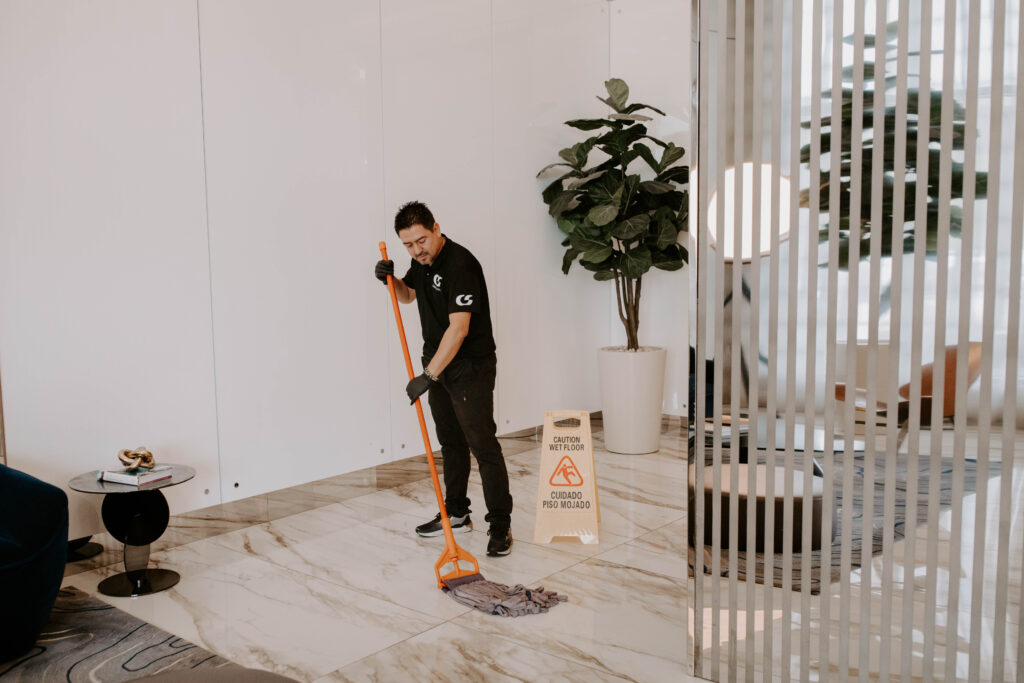
To keep stone looking right:
- Use only a pH-neutral stone cleaner for routine mopping.
- Dust mop daily. Sand does most of the scratching.
- Put proper matting at every entrance so grit stops before it reaches the stone.
- Reseal on a schedule. Frequent wet cleaning wears sealer down, and Florida floors get wet-cleaned a lot.
- Hone and polish when etching has spread. Isolated marks can often be spot-treated.
If the shine is already gone, see our marble and stone polishing service.
Commercial Carpet: The 48-Hour Window
Commercial carpet in Florida has to be fully dry within 24 to 48 hours of cleaning. That’s the window the EPA gives before mold risk rises, and in a humid building it closes fast. A musty smell a few days later usually means the carpet stayed damp too long, not that it was cleaned poorly.
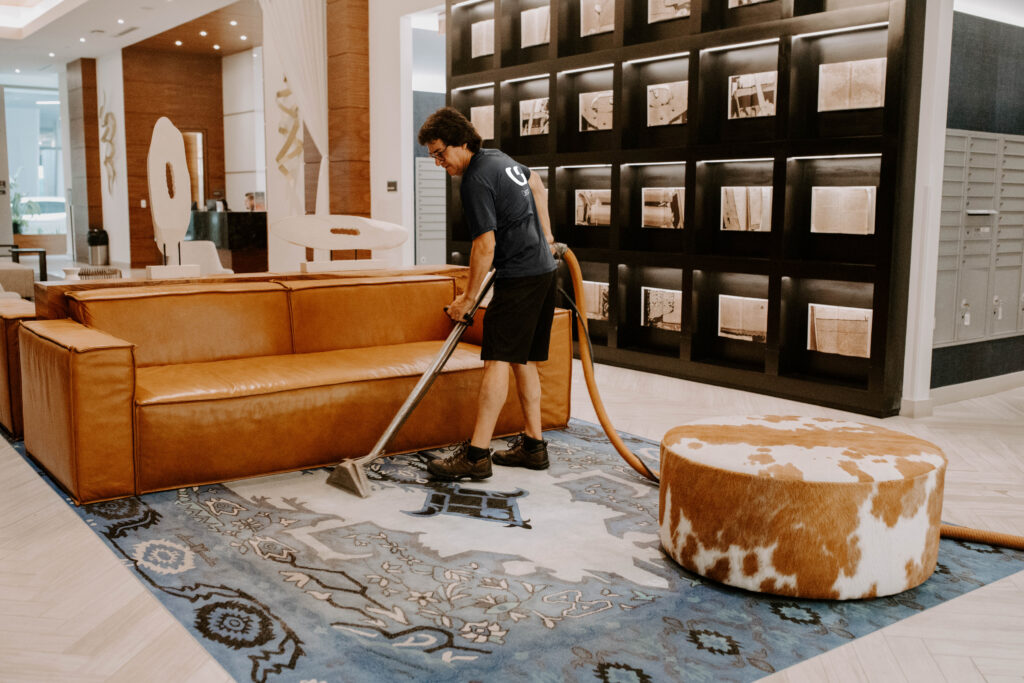
The fixes are mostly about scheduling and drying:
- Clean when the building can keep the AC running afterward. Extracting Friday night and then setting the thermostat back for the weekend is how offices end up with that Monday-morning smell.
- Use air movers and make the extraction passes count so less water stays in the backing.
- During wet season, lean on low-moisture methods for routine work and save deep extraction for drier stretches.
- Spot-clean entrance carpet more often. It gets wet first.
Our crews plan dry time into every job.
Entrances, Matting, and Exterior Walkways
The entrance does more damage to Florida floors than almost anything that happens inside. Most of the water and sand that wears down finish, stone, and carpet comes through the front door. The cheapest floor care is stopping it there.
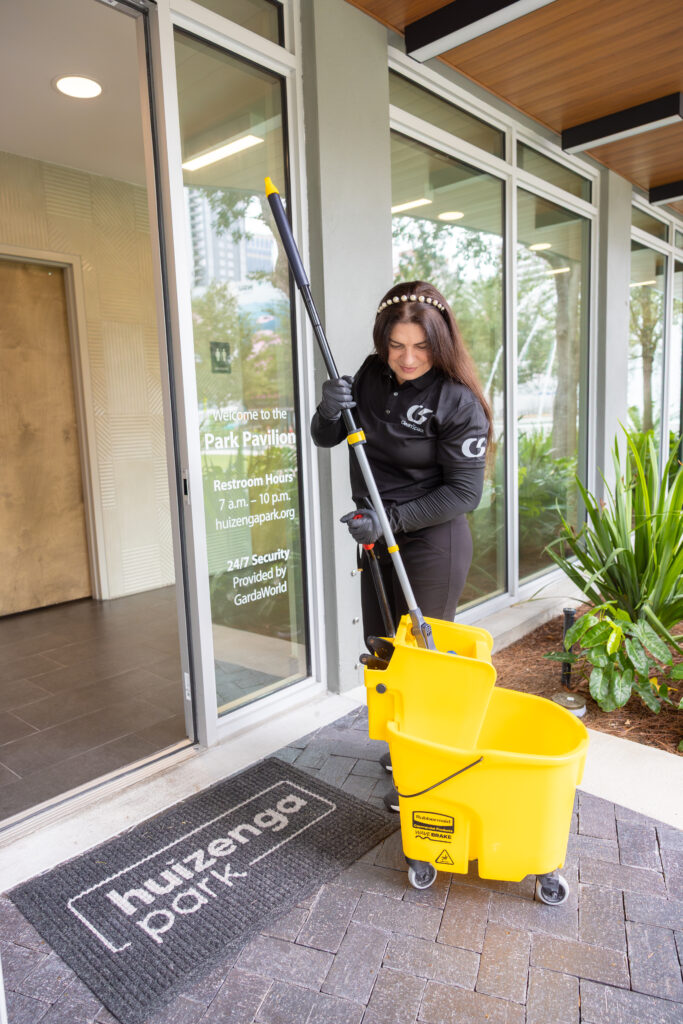
A solid matting setup has two parts: a coarse scraper mat outside to knock off sand, and an absorbent wiper mat inside to catch water. Most buildings don’t have enough of the inside kind. The goal is that shoes are close to dry by the time they hit hard flooring. In rainy season, mats get saturated fast; a soaked mat just transfers the water. Swap them out or add extras when that happens.
Outside, heat and moisture grow algae and mildew on pavers, walkways, and stairs. Besides looking bad, it’s slippery. Regular commercial pressure cleaning keeps it under control, and wet season is when it needs doing most often. It also cuts down on the grit that ends up on lobby marble.
How Floor Care Changes in Colder Climates
In colder parts of the country the biggest threat is winter ice melt, not humidity. Rock salt and calcium chloride track in all winter and leave a white film that dulls finish and, left long enough, eats into it. Programs in the Mid-Atlantic add an ice-melt neutralizer to routine mopping, beef up matting from December through March, and push recoats to spring once salt season ends.
Government buildings feel this hardest. Courthouses, permit offices, and city halls take steady foot traffic every winter day, and the public doesn’t wipe its feet. In Northern Virginia, where salt and ice melt come through every public entrance from December to March, CleanWise Solutions builds floor care into its janitorial programs for government buildings in Alexandria, scheduled for evenings and weekends so public offices stay open during the day. Florida’s county offices and courthouses deal with the wet-season version of the same problem: what our government building cleaning is built for.
The calendar runs backwards. Up north the big floor work happens in spring and summer after the salt is gone. In Florida the best window is winter, when the air is driest. If you manage properties in both regions, don’t copy one schedule across the portfolio. The floors may be the same. The seasons that hurt them aren’t.
A Year-Round Florida Floor Care Schedule
Put the heavy work in the dry months and shift to protection and drying in the wet ones. Traffic and floor type will adjust the frequencies, but this is a solid starting point:
| Task | Dry season (Nov to Apr) | Wet season (May to Oct) |
|---|---|---|
| VCT strip and recoat | Best time to schedule | Avoid unless the building can stay closed and cooled |
| Burnishing | Regular schedule | More often in traffic lanes |
| Stone floors | Daily dust mop, pH-neutral cleaner | Same, plus extra attention at entrances |
| Stone sealing and polishing | Best time to schedule | Spot work only |
| Carpet | Deep extraction | Low-moisture maintenance, AC on after every clean |
| Entrance mats | Routine cleaning | Swap or add mats when saturated |
| Exterior walkways | Pressure clean as needed | Pressure clean more often, watch for algae |
Frequently Asked Questions
How often should commercial floors be stripped and waxed in Florida?
Most commercial VCT floors need a full strip and recoat once or twice a year, with regular burnishing in between. Heavy-traffic buildings may need more. Whenever possible, schedule it between November and April when humidity is lower and finish cures properly.
Why is my floor finish cloudy or soft?
Usually trapped moisture. Either a coat went down before the previous one cured, or the building was too humid while it dried. Stripping and recoating under dry conditions with longer dry times fixes it.
Can floors be waxed during Florida’s rainy season?
Yes, if the AC runs during and after the job, doors stay closed, and each coat gets extra dry time. It’s riskier than dry-season work, so plan big jobs for winter when you have the choice.
What cleaner is safe for marble floors?
A pH-neutral cleaner made for natural stone. Acidic and many all-purpose cleaners etch marble; the damage shows as dull spots that need honing to remove.
How long should commercial carpet take to dry after cleaning?
Within 24 to 48 hours, the window EPA guidance gives for preventing mold. In Florida, aim for the short end by running AC and air movers afterward.
Build Your Floor Program Around Florida’s Calendar
If your current floor program was written for somewhere else, it’s probably costing you an extra recoat every year. Clean Space will walk your facility for free, look at the floors you have and how the building is used, and build a schedule that fits Florida’s seasons. Request a free quote or call 1-754-254-0375.